assignment-cenima
- [ ]
Critical Analysis of Literature and Cinema
Assignment - 4
Vaisakh K M - 202117b3543
Introduction
reference: https://www.youtube.com/watch?v=Ek40XtVsO7g
In Spider-Man: Across the Spider-Verse, each character’s story is painted with intense emotion and striking visuals. The film, known for its unique animation style and rich storytelling, follows multiple Spider-People across different dimensions, each with their struggles and journeys. One of the most compelling sequences is Gwen Stacy’s opening montage, which doesn’t just serve as a background for her character but also gives insight into her emotional struggles, fears, and determination.
This scene introduces Gwen’s inner world in a visually striking way that captures her loneliness and longing. By analyzing Gwen Stacy’s montage scene in detail, we can explore how the filmmakers used color, music, and imagery to highlight her emotional depth and set the tone for her character throughout the movie.
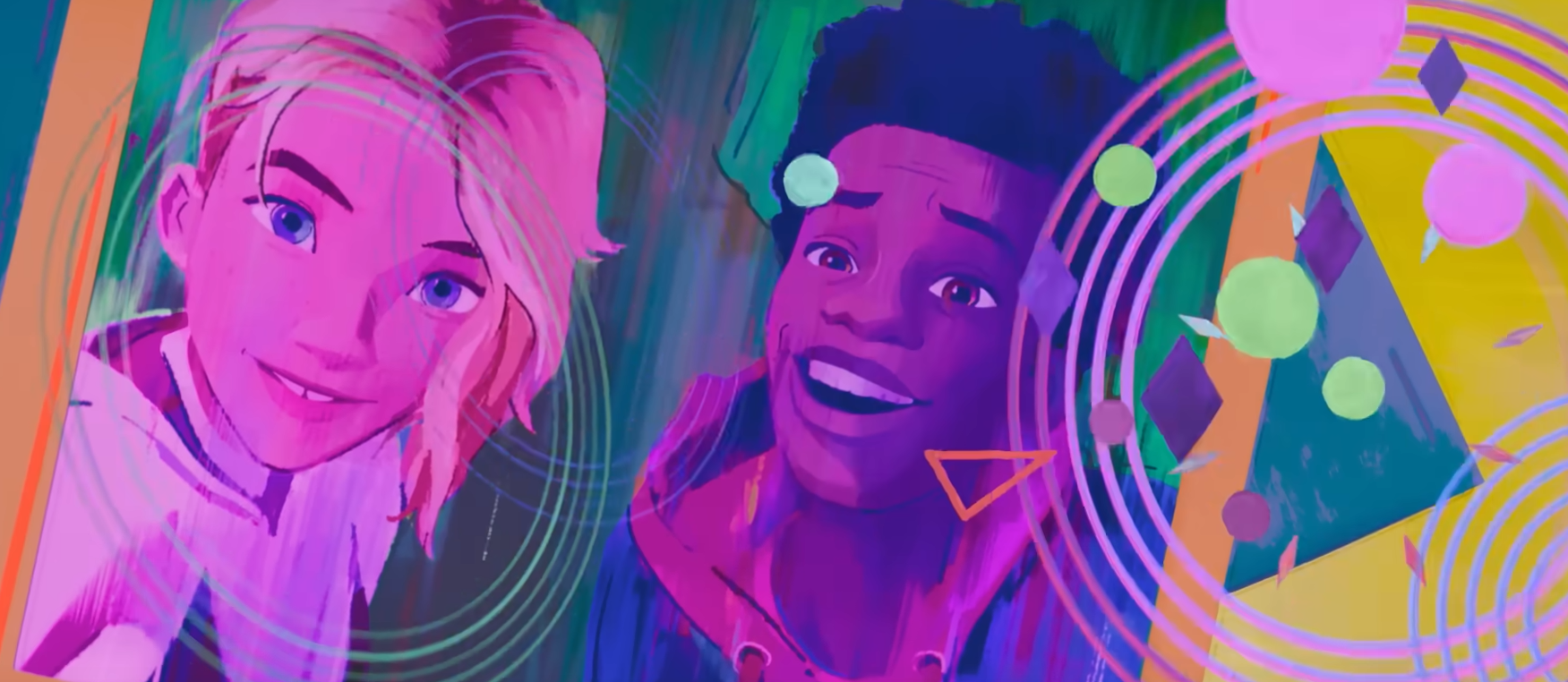
Gwen’s Emotional Landscape: Visuals and Colors
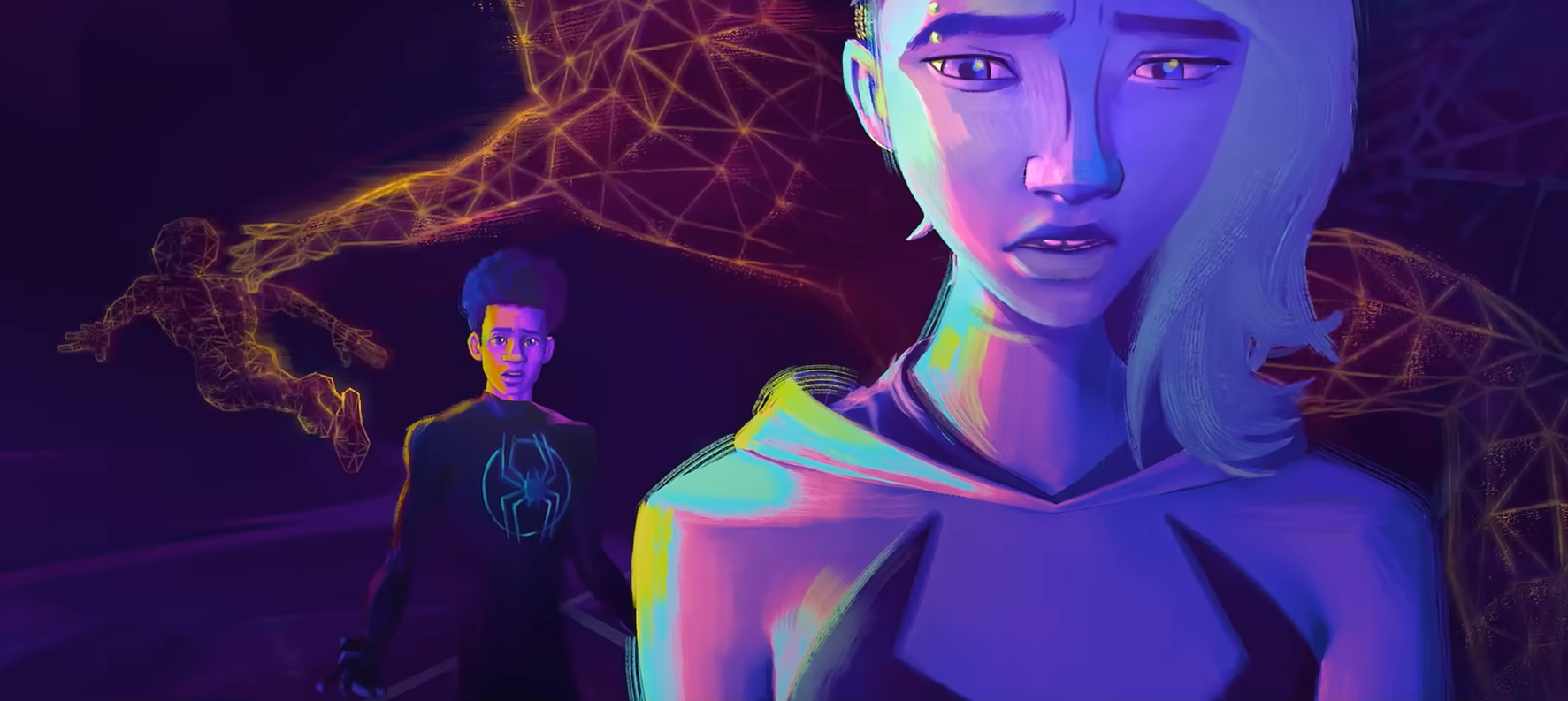
The visual style of this scene plays a major role in conveying Gwen’s feelings. The filmmakers use a watercolor-like, painterly style that reflects Gwen's mood swings, giving the sequence a deeply personal and subjective feel. Unlike the more vibrant, energetic tones used for Spider-Man Miles Morales, Gwen's world is often muted, with soft pastels and washed-out colors. This color choice mirrors her isolation, suggesting that her world has lost its brightness due to her internal struggles.
When Gwen is thinking about her past, especially about her relationship with her best friend, Peter Parker, and his tragic death, the colors shift to darker blues and purples, which convey sadness and guilt. This change in tone helps us understand the weight Gwen carries from that incident. In a few brief shots, we’re shown flashes of her happy memories with Peter, but the darkened, dripping colors almost seem to wash them away, symbolizing how her happiness has been tainted by loss and regret.
Another powerful use of color occurs when Gwen confronts her father, a police officer who has unknowingly been hunting her as Spider-Woman. Here, the colors turn cold and stark, emphasizing the emotional distance between them. The scene’s color shifts help to reveal Gwen’s inner feelings without needing any explicit dialogue—viewers can feel her pain, fear, and isolation simply by observing the hues and tones on screen.
The Role of Music and Sound

Music and sound design are key to conveying Gwen's emotions in this montage. The film uses a haunting, echoing melody that matches the somber visuals, setting a melancholic tone that resonates with her loneliness and internal conflict. This is a change from the usual upbeat and energetic music associated with superhero movies, signaling that Gwen’s story is more personal and introspective.
As the music plays, Gwen’s own voice serves as the narration, guiding us through her thoughts. Her tone is subdued, almost as if she’s exhausted by the weight of her emotions. This voiceover adds a layer of intimacy to the scene, making us feel like we’re reading her personal diary. Gwen talks about her loneliness and the cost of being Spider-Woman, her voice echoing through empty spaces, enhancing the feeling of isolation.
One of the most powerful moments in the scene comes when Gwen plays her drum kit, pouring her emotions into the music. The sound of the drums is loud and chaotic, capturing the intensity of her pain, anger, and frustration. This is Gwen's way of releasing her feelings in a world where she feels misunderstood and trapped. The drumbeats are fast and raw, matching the chaotic visuals, and give us a sense of Gwen’s bottled-up emotions finally being released.
Character Relationships and Emotional Conflict
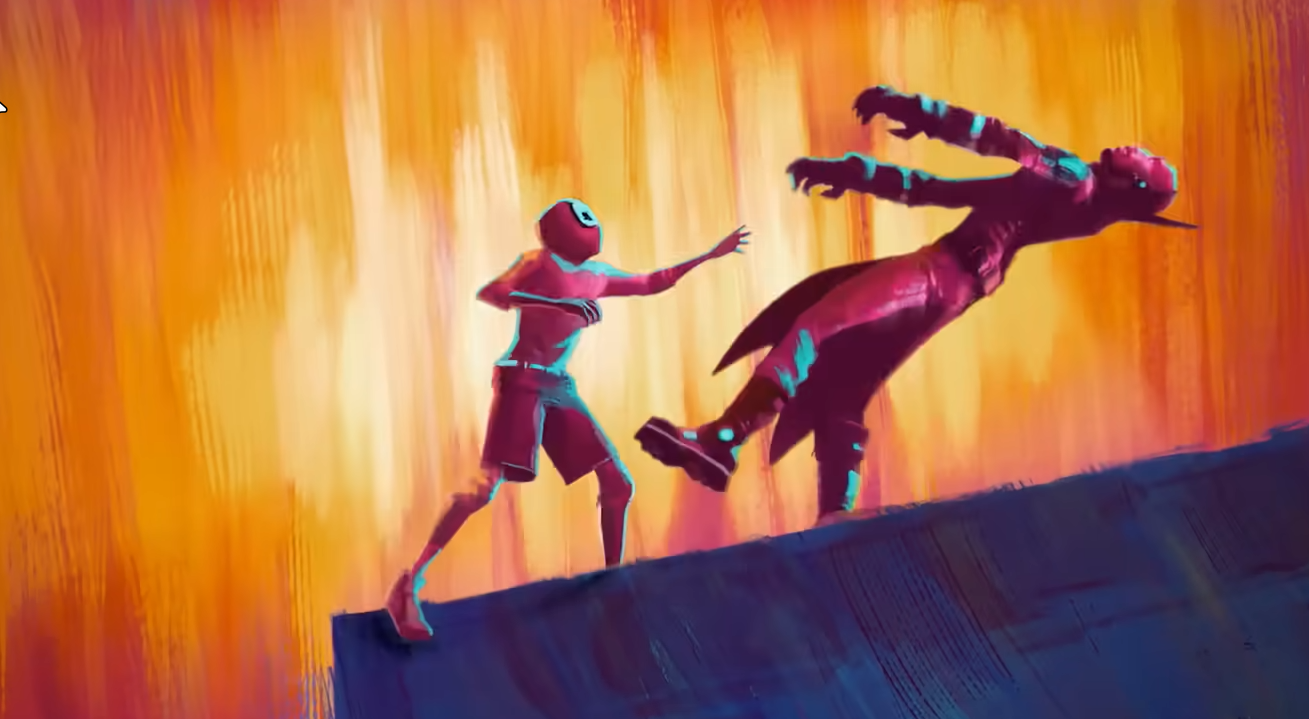
Gwen’s story revolves around the tension between her duty as Spider-Woman and her desire for connection. In this montage, we see how her relationships have been strained due to her secret identity. Her relationship with her father is particularly heartbreaking. Her father is a police officer who is dedicated to catching Spider-Woman, not realizing that he’s actually hunting his own daughter. This creates a deep conflict within Gwen, as she yearns for her father’s love and acceptance but fears his reaction if he discovers her secret.
The filmmakers emphasize this tension visually by often showing Gwen and her father separated by barriers, such as doors or glass. This use of physical separation symbolizes the emotional gap between them, making Gwen’s isolation feel even more intense. When she tries to connect with him, there’s always a sense of fear holding her back. The film captures these moments subtly, allowing us to feel her emotional struggle without words.
Her relationship with Peter Parker, who was her best friend in her universe, also plays a crucial role. Gwen’s guilt over Peter’s death is evident throughout the scene. She blames herself, feeling as though she failed him. This guilt keeps her from forming new connections, as she’s afraid of losing people she cares about. Through brief flashbacks, we see her memories with Peter, but they are always tinged with sadness, as if she can’t fully move past her grief.
Symbolism and Artistic Techniques
One of the most striking artistic techniques in Gwen’s montage scene is the use of symbolic imagery. The visuals are dreamlike, often blurring the boundaries between reality and emotion. For example, her world sometimes appears to dissolve into watercolor streaks, symbolizing her sense of fading identity and the lack of stability in her life.
Gwen’s drum kit serves as a metaphor for her bottled-up emotions. She uses drumming as an outlet, and the intense, fast-paced scenes of her playing the drums reflect her internal turmoil. The drumbeats almost feel like a heartbeat, pulsing with her frustration, anger, and need for release. This imagery is powerful because it shows Gwen’s vulnerability—despite being a superhero, she’s a young woman struggling to find her place in the world.
The scene also incorporates subtle spider motifs to remind us of her dual identity. Shadows or silhouettes of webs appear faintly in the background, reinforcing the fact that her responsibilities as Spider-Woman are always present, even when she’s trying to escape them. The web imagery symbolizes both her power and her entrapment, showing how her superhero identity is both a gift and a curse.
Conclusion
Gwen Stacy’s montage scene in Spider-Man: Across the Spider-Verse is a masterful combination of visual artistry, sound, and emotional storytelling. Through the use of muted colors, haunting music, and symbolic imagery, the filmmakers paint a vivid portrait of Gwen’s inner world. This scene encapsulates her feelings of loneliness, regret, and inner conflict in a way that resonates deeply with the audience. We’re drawn into her world, feeling the weight of her responsibilities, her longing for connection, and the struggles that define her journey.
In Across the Spider-Verse, Gwen’s story reminds us that even superheroes face personal challenges. They, too, carry regrets, fears, and a desire for acceptance. This montage scene beautifully captures the duality of her character, making her not only a superhero but also a relatable, human figure. Through the artful use of visuals and sound, we understand Gwen’s pain and resilience, setting the stage for her journey as she learns to balance her identity with her need for connection and self-acceptance.