shots - cenima
Critical Analysis of Literature and Cinema
Assignment - 3
Vaisakh K M - 202117B3543
Types of Camera Shots and Angles
Close-Up Shot
Object takes up most of the screen, usually filmed from neck upwards.
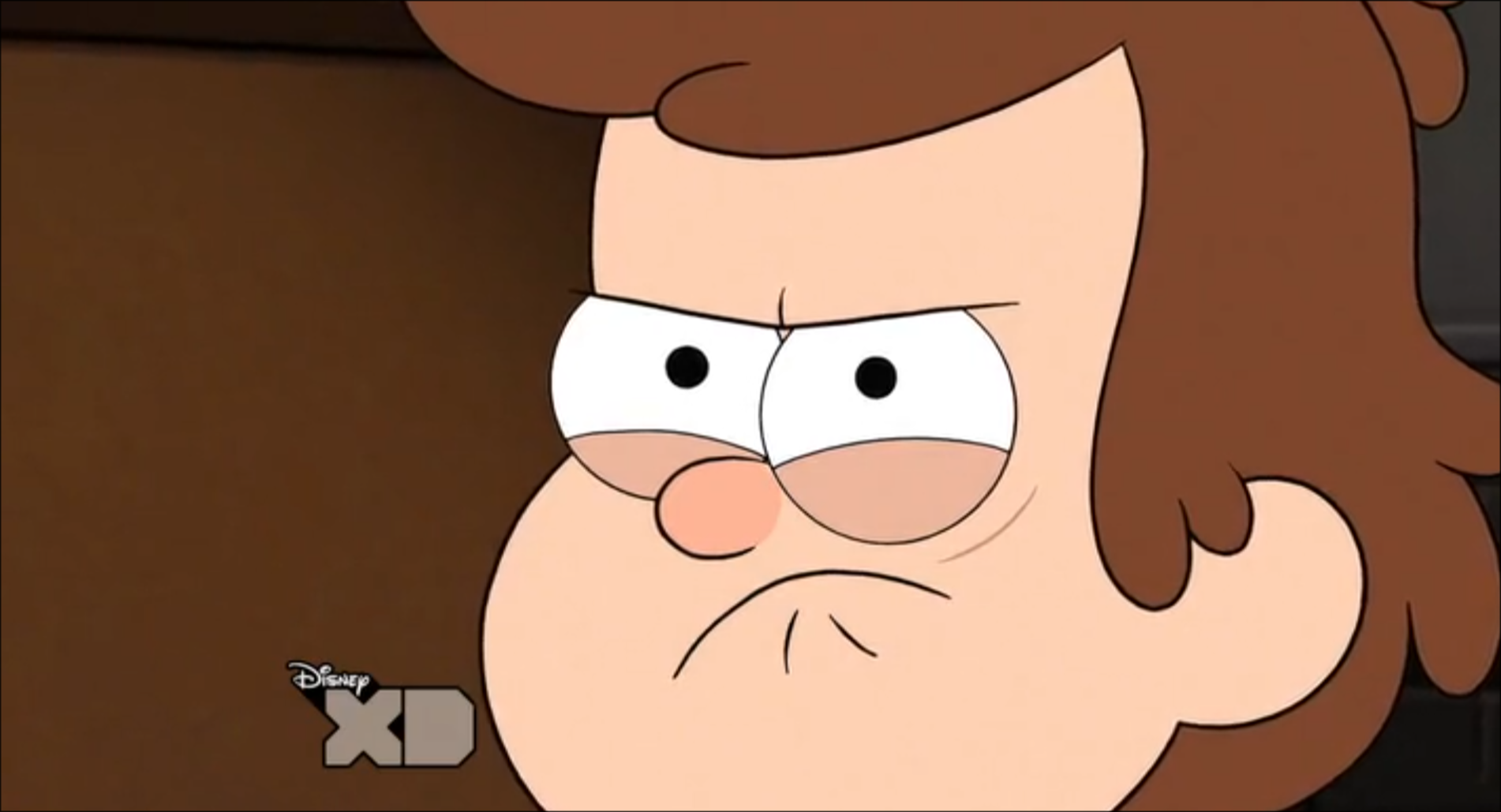
A close-up shot brings the subject’s face or an important detail into full focus by framing it from the neck up. This shot allows the audience to connect intimately with the subject, focusing on expressions, emotions, and subtle gestures that might otherwise go unnoticed. It’s often used to highlight the intensity or vulnerability of the character, letting the viewer feel closer to their internal state.
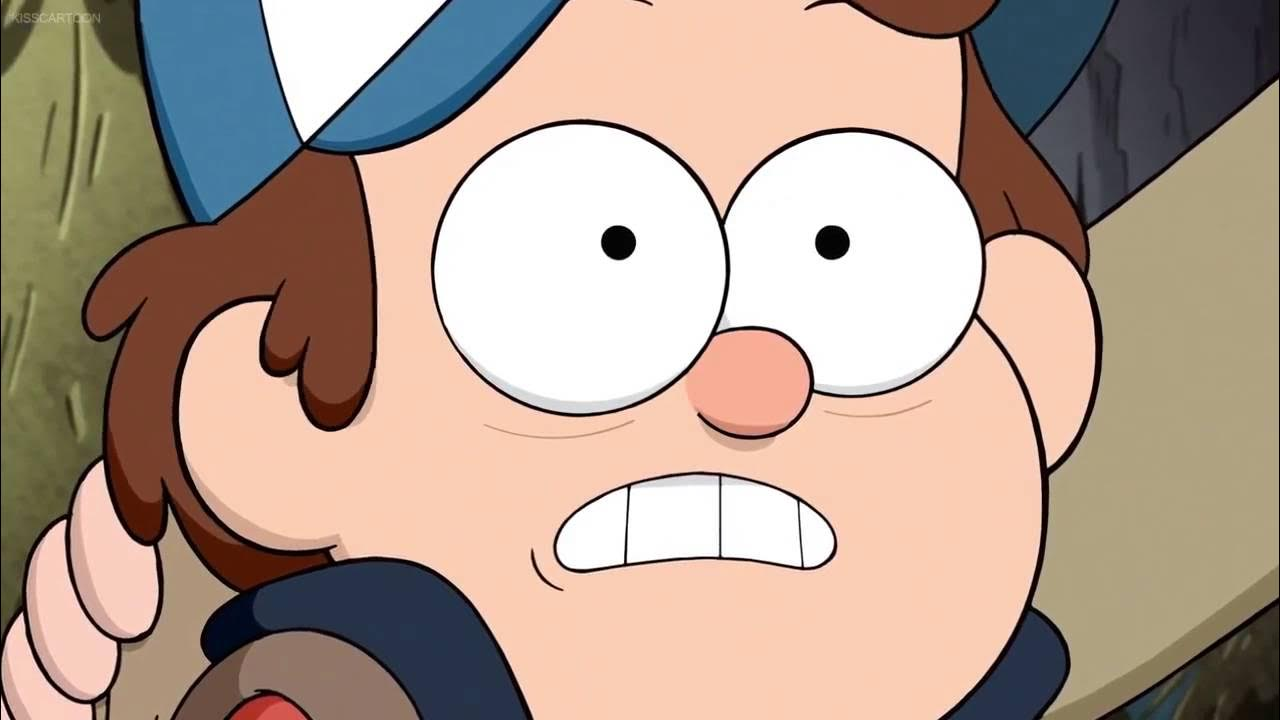
Example: In Season 2, Episode 10, "Northwest Mansion Mystery," there’s a close-up of Dipper’s face when he is angrily confronting Pacifica about her family’s treatment of others. This shot focuses on his intense expression, capturing his frustration and determination as he tries to hold her accountable for her actions
 |
|---|
Extreme Close-Up
Object takes up the entire screen. Focus is on one part of the body or object.
In an extreme close-up, the camera zooms in even further, sometimes only showing a single part of the body or object, such as an eye, mouth, or a specific detail. This shot draws the audience’s attention to something significant, allowing them to experience a heightened sense of intimacy or intrigue. It can create tension, emphasize importance, or convey emotions that might be overlooked at a greater distance.
Example: In Season 1, Episode 7, "Double Dipper," there’s an extreme close-up on Dipper’s eye when he sees Wendy dancing with Robbie. This shot zooms in on his eye, capturing his jealousy and disappointment. It emphasizes his emotional reaction, making the moment feel more intense and personal.
Straight-On Shot
Camera is level with the subject, typically showing from the chest upwards.
A straight-on shot is taken from the chest up with the camera level with the subject, allowing the viewer to observe without being influenced by any angle. This shot is neutral and objective, neither glorifying nor diminishing the character, making it feel natural and familiar. It allows the audience to focus more on the content of the scene rather than the perspective, creating a sense of realism and connection.
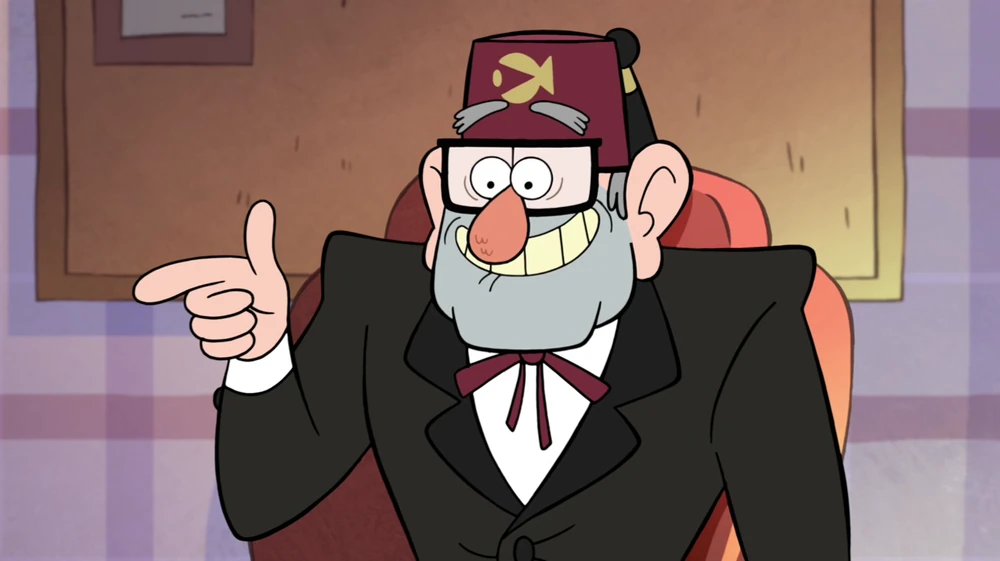
Example: In Season 1, Episode 1, "Tourist Trapped," when Grunkle Stan introduces the Mystery Shack to visitors, the straight-on shot captures him from the chest up, creating a natural perspective for the audience. It makes the viewer feel like one of the tourists, observing Stan’s eccentric tour in a way that feels grounded and familiar.
Medium Shot
Camera is level with the subject, showing from the waist upwards.
The medium shot, framed from the waist up, balances the character and their actions, showing more context than a close-up but still focusing on their behavior. Often used in dialogue scenes, it gives the audience a view of the character’s gestures and surroundings, enhancing their understanding of the interactions and events taking place. It’s effective for showing a character in action without overwhelming details.
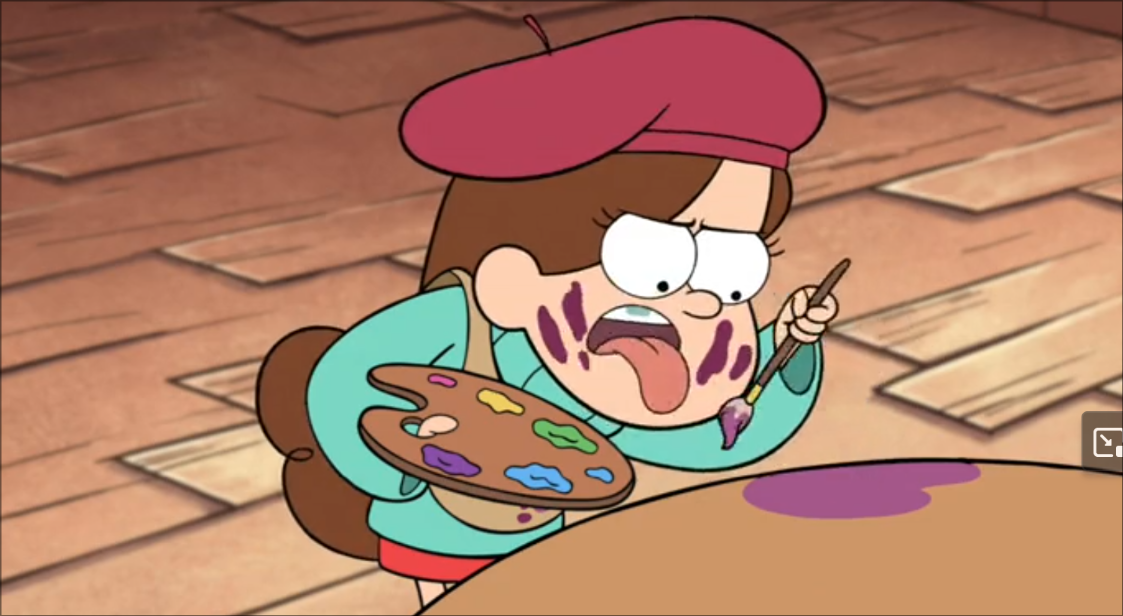
Example: In Season 1, Episode 3, "Headhunters," when Mabel is working on her arts and crafts projects, the medium shot shows her from the waist up, highlighting her actions and facial expressions. This shot allows the audience to see her enthusiasm and quirky personality as she works on her bizarre, colorful creations.
Long Shot
Object takes up about 3/4 of the screen.
A long shot frames the subject to take up about three-fourths of the screen, showing their full figure in relation to the surroundings. This shot is great for placing a character within a particular setting, giving context while still focusing on them. The viewer can see the character’s movements and body language while also absorbing details about their environment, helping to tell the story visually.
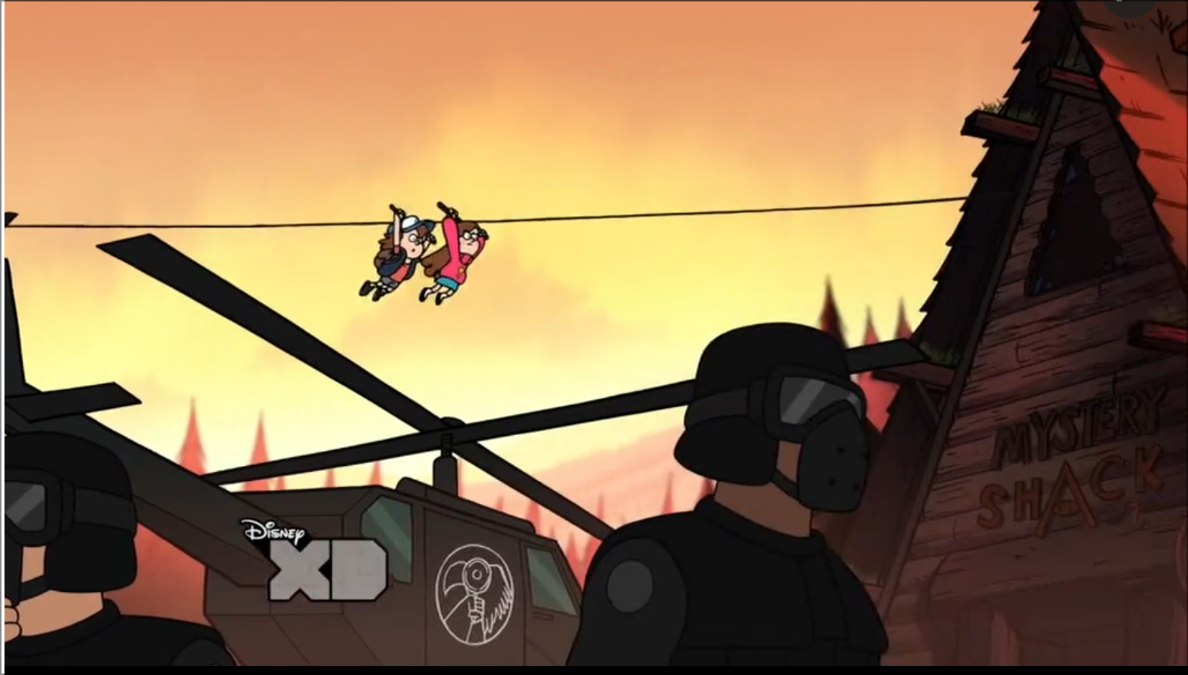
Example: In Season 2, Episode 11, "Not What He Seems," when Dipper and Mabel are standing outside the Mystery Shack, a long shot frames them within the larger setting. This shot places the twins in context, showing the environment and setting the stage for the ominous events that follow without losing focus on their central presence
Extreme Long Shot (Establishing Shot)
Object takes up a very small portion of the screen, if at all.
In an extreme long shot, the subject occupies a very small part of the screen, if at all, with the surrounding environment dominating the frame. Often used at the beginning of a scene, this shot establishes the locale, setting the tone and providing context. It allows the viewer to understand where the action takes place and prepares them for the scene that follows.
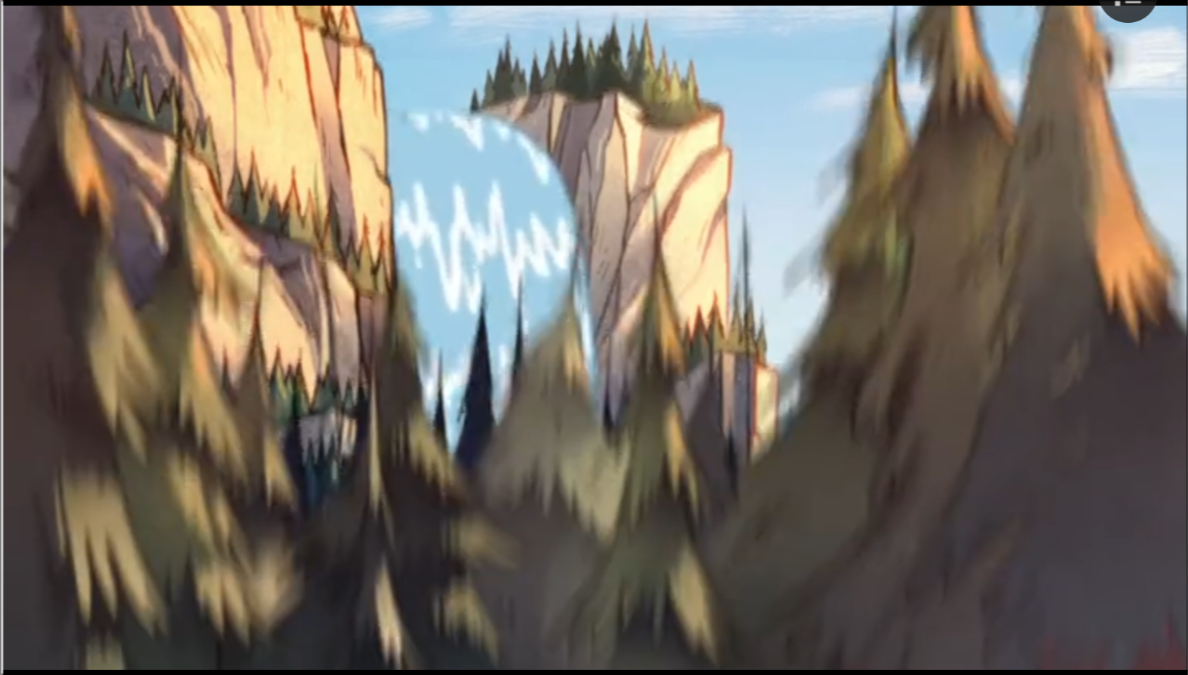
Example: In Season 1, Episode 1, "Tourist Trapped," the show opens with an extreme long shot of the town of Gravity Falls, with the forest, mountains, and sky filling most of the frame. The Mystery Shack is just a small part of the scene, helping to establish the remote, mysterious nature of the setting before the main characters are introduced.
High Angle Shot
Camera looks down on the subject.
A high angle shot is taken with the camera looking down on the subject, creating a sense of vulnerability, weakness, or inferiority. This shot can make a character appear smaller or less powerful, often conveying a feeling of submission or helplessness. It’s commonly used to make the audience feel sympathetic towards the character or understand their position in the scene.
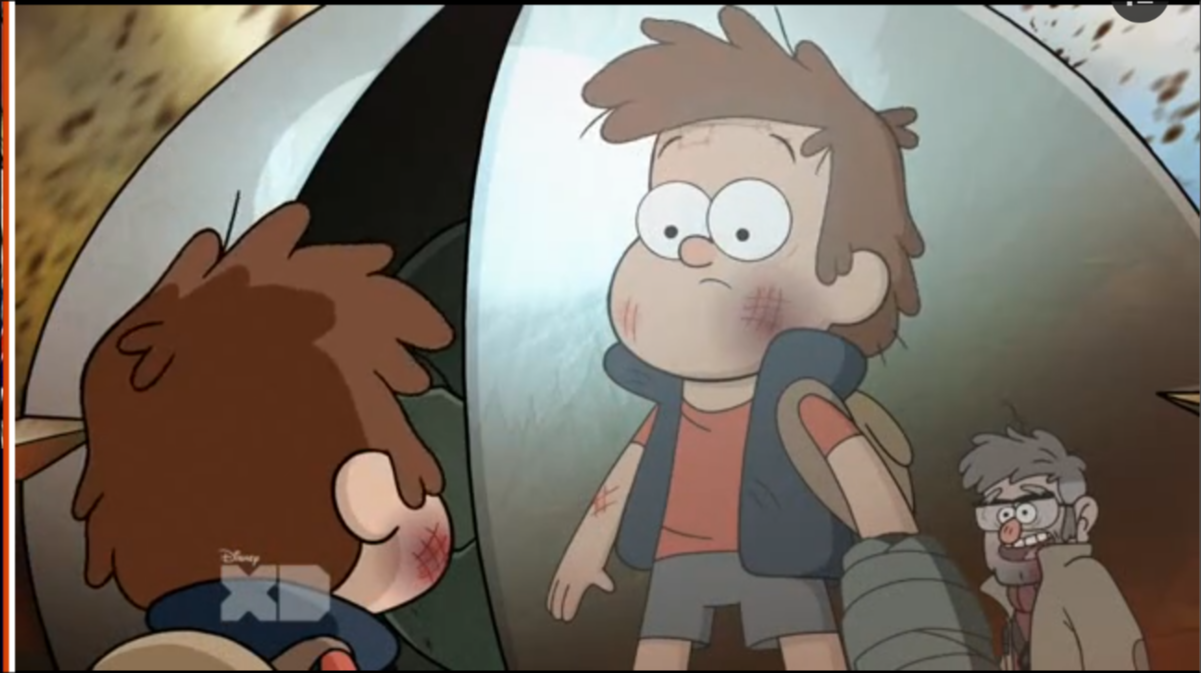
Example: In Season 2, Episode 17, "Dipper and Mabel vs. the Future," there’s a high angle shot of Dipper standing alone after he’s offered the apprenticeship with Ford. This angle makes him appear smaller and vulnerable, reflecting his uncertainty and the weight of the decision he faces.
Low Angle Shot
Camera looks up at the subject.
In contrast, a low angle shot places the camera looking up at the subject, making them appear larger, more dominant, and powerful. This angle is frequently used in superhero or action films to emphasize strength and authority. It can make the audience feel a sense of awe or admiration for the character, elevating their status in the viewer’s eyes.
Example: In Season 1, Episode 20, "Gideon Rises," there’s a low angle shot of Gideon in his giant robot suit as he attacks the Mystery Shack. From this perspective, Gideon looks massive and intimidating, enhancing his power and menace in this scene, which aligns with his villainous intent
Canted Framing / Dutch Angle
Camera is slanted.
A Dutch angle, or canted framing, tilts the camera on its axis, creating a skewed, off-balance effect. This angle is used to convey unease, confusion, or instability, often reflecting a character’s mental state or a chaotic situation. The viewer experiences the scene from a disorienting perspective, amplifying a sense of unpredictability and tension.
Example: In Season 2, Episode 19, "Weirdmageddon Part 2: Escape from Reality," there’s a Dutch angle shot when the characters enter the bizarre world created by Bill Cipher. The skewed angle adds to the surreal, topsy-turvy environment and reflects the characters' confusion as they navigate the chaotic, dreamlike landscape.
Panning Shot
Camera swivels horizontally while remaining stationary.
In a panning shot, the camera remains stationary but swivels horizontally, often used to follow a moving subject or explore a location. This smooth, continuous movement can establish location, reveal information, or create a sense of motion across the screen. It’s versatile, as it can track a character’s journey from one point to another, scan across a group of characters, or present a panoramic view.
Example: In Season 2, Episode 1, "Scary-oke," there’s a panning shot during the zombie attack on the Mystery Shack. As the camera pans across the room, it follows the action, showing different characters fighting off zombies in one continuous motion. This gives the viewer a sense of the chaotic action without cutting away.